
SCORE puts it simply: “even if you let someone else keep the books for you, you need to understand the meaning behind the math.” The good news is that you only need to know three reports, and the question each one answers.
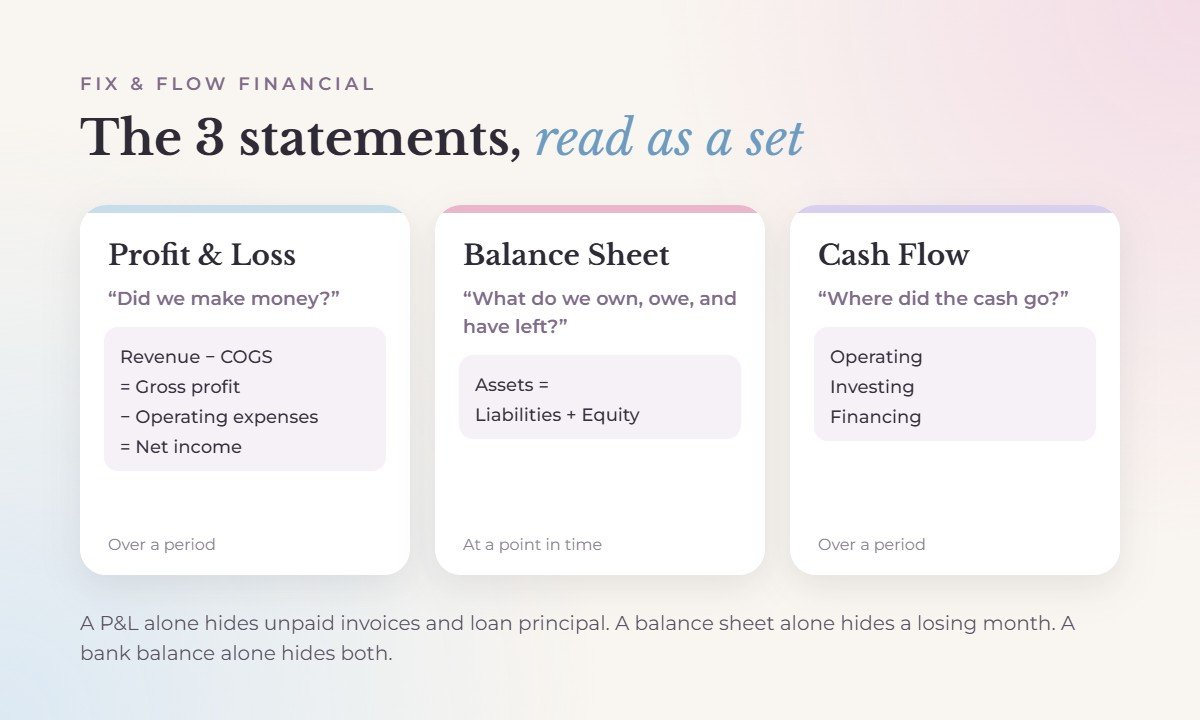
1. The profit and loss statement: "Did we make money?"
Also called the income statement, the P&L covers a period of time, such as a month or a year. It works like this:
Revenue − Cost of Goods Sold = Gross Profit
Gross Profit − Operating Expenses = Net Income
Use it to check your pricing, see which jobs, services, or sales channels actually make money, and spot expenses that are creeping up.
2. The balance sheet: "What do we own, owe, and have left?"
The balance sheet is a snapshot of a single moment in time. It always follows the same equation:
Assets = Liabilities + Equity
It shows your cash, what customers owe you, what you owe others, your loans, and what's left for the owners. It's how you judge whether the business can handle its debt, and it's the statement lenders and buyers read first.
3. The cash flow statement: "Where did the cash go?"
This report covers a period, like the P&L, but it tracks actual cash in three groups: operating (day-to-day business), investing (equipment and other long-term purchases), and financing (loans, loan payments, and owner contributions or draws).
It's the report that explains a profitable but empty bank account, and it helps you time hires, purchases, draws, and debt payments.
Why you read them together
Each report hides something the others show. A P&L alone hides unpaid invoices and loan principal. A balance sheet alone hides a losing month. A bank balance alone hides both. That's why a good monthly package includes all three, plus your accounts receivable and accounts payable aging: the cash that's about to come in and the bills that are about to go out.
What lenders look for

Lenders don't underwrite a bank balance. They underwrite statements that agree with each other and with your tax returns. They typically ask for:
Two to three years of profit and loss statements, balance sheets, and business tax returns
Year-to-date monthly financials
Accounts receivable and accounts payable aging reports
A personal financial statement (SBA Form 413 for SBA programs)
Getting ready matters. In the Federal Reserve Banks' 2025 Report on Employer Firms, only 41% of applicants received all the financing they sought, and 24% received none. Differences between your internal financials and your tax returns are a common reason applications stall.
Start reading them monthly
You can't produce three years of clean statements after the fact. The time to start is now, with one monthly close at a time. Every Fix & Flow client gets all three statements each month in a Financial Snapshot, with a plain-language explanation of what changed and what to do next. Book a free consultation and we'll walk you through yours.
Sources: SCORE, 3 Basic Financial Statements You Need to Keep Track of Your Money; Federal Reserve Banks, 2025 Report on Employer Firms (2024 Small Business Credit Survey). This article is general education, not tax, legal, or lending advice.